From Innovation to Industry Standard
CASE STUDY
For the past four years, OSR Metallrecycling has been sorting automotive scrap by alloy using Cleansort’s LIBS technology. To date, this has amounted to more than 20,000 metric tons of aluminum, resulting in CO₂ savings of up to 98 percent compared to primary aluminum. The case study shows how a pioneering project became an industry standard.
How does a pioneering project become an industry standard?
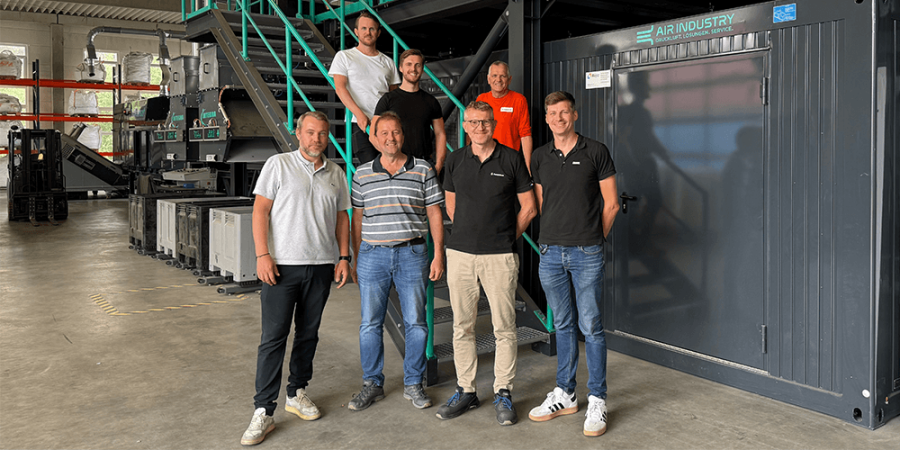
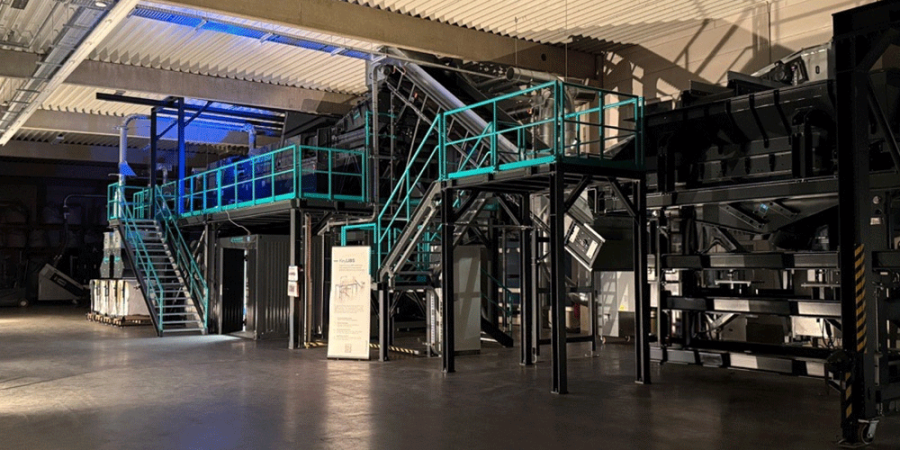
When OSR introduced Cleansort’s laser-based sorting system in 2022, the technology had hardly been tested in industrial shift operations. Today, the system operates continuously, sometimes in three shifts. OSR thus has a head start in terms of experience that many companies, which are just now introducing the technology, still need to build up.
PRECISION THAT MAKES ALL THE DIFFERENCE
Dirty or mixed automotive scrap pushes traditional sorting methods, such as X-ray transmission, density separation, or optical systems, to their limits. Especially when it comes to separating chemically similar alloys. Cleansort’s patented, two-step process solves precisely this problem: Targeted laser cleaning exposes the material’s surface, and subsequent spectroscopy analyzes the exact chemical composition, regardless of coatings or contamination. In this way, the system separates aluminum scrap by alloy into the 5000 and 6000 series fractions.
The results can be summarized in numbers: more than 20,000 metric tons of sorted aluminum, up to a 98 percent reduction in CO₂ emissions compared to primary aluminum, and 142,000 metric tons of emissions avoided. This development was made possible by a project funded by the German Federal Environmental Foundation, which over the years has grown into a close partnership that now serves as a blueprint for closed-loop material cycles in metal recycling.

DOWNLOAD NOW
All the background information, key metrics, and insights from the field are available in the full case study, “From Innovation to Industry Standard,” which is available for free download.